
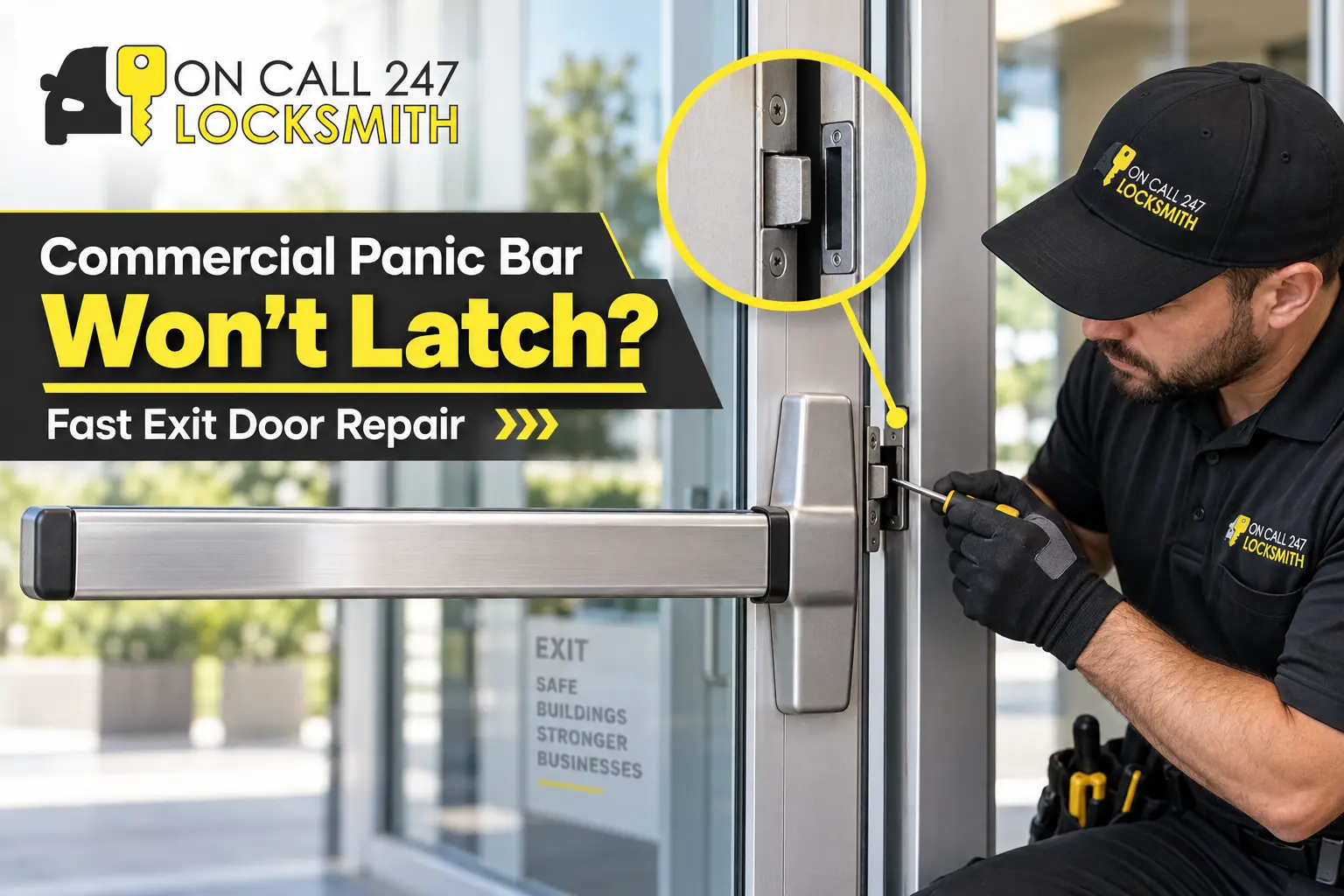
A panic bar that won’t latch all the way leaves your exit door unsecured and puts you out of compliance. If your door feels loose, doesn’t click into place, or requires extra force to close, the problem could be alignment, worn hardware, or internal mechanism failure.
Here’s what causes commercial panic bars to fail and what you should check before calling someone out.
Common Causes of Panic Bar Latching Problems
Most latching failures come from one of five issues. I’ve worked on enough exit doors across Lewisville and the DFW area to know these show up again and again.
Strike Plate Misalignment
The strike plate on the door frame receives the latch bolt when the door closes. If it’s even slightly off, from settling, frame shifts, or improper installation, the latch won’t reach it. You’ll hear the door close but the latch never clicks. Buildings settle, especially newer commercial construction. A quarter-inch shift is all it takes.
Worn or Damaged Latch Mechanism
The latch bolt retracts when you push the bar and extends when you release it. Over time, springs weaken, the bolt wears down, or internal parts jam. High-traffic doors, think schools, offices, retail experience this faster.
Door Sag or Hinge Problems
Commercial doors are heavy. If the hinges loosen or wear out, the door droops. That changes where the latch lines up with the strike. You might notice the door scraping the frame at the bottom or not sitting flush when closed.
Door Closer Issues
The door closer controls how fast and firmly the door shuts. If it’s adjusted too weak, the door doesn’t latch with enough force. If it’s too strong, the bar mechanism can get jammed or misaligned from repeated slamming.
Frame Damage or Warping
Metal frames can bend from impacts. Wood frames can warp from humidity or temperature changes. Either way, the strike plate moves and the latch misses its target. This is especially common on exterior doors that face direct sun or weather exposure.
What Happens When a Panic Bar Doesn’t Latch
An unsecured exit door creates immediate problems. The door can blow open in wind, let in weather, or allow unauthorized entry. It also puts you out of compliance with local fire and safety codes, which require panic hardware to function properly.
If you need the door working today, a commercial locksmith can diagnose and repair it on-site.
When It’s Not the Panic Bar at All
Sometimes the panic bar itself is fine. The problem is the door, frame, or closer. I’ve had clients replace an entire panic bar only to find out the strike plate was just mounted too high.
Before assuming the bar is broken, check the alignment visually. Close the door slowly and watch where the latch lands. If it’s hitting above, below, or to the side of the strike plate opening, the bar isn’t the issue.
Testing the Bar Mechanism
With the door open, push the panic bar and watch the latch bolt. It should retract smoothly and spring back firmly when you release. If it sticks, moves slowly, or doesn’t return all the way, the internal mechanism needs attention.
Checking the Strike Plate
Look at the strike plate on the frame. Is it loose? Are the screws stripped? Is the opening worn or enlarged? A loose or damaged strike won’t hold the latch, even if everything else works perfectly.
Can You Fix a Panic Bar Yourself?
Most commercial panic bars require specialized tools and knowledge of fire safety codes. Adjusting the latch, realigning the strike, or replacing internal components isn’t something I’d recommend without proper training.
Some issues are minor. Tightening loose screws on the strike plate or adjusting the door closer speed are simple tasks that maintenance staff can usually handle.
How Long Does a Panic Bar Typically Last?
Quality commercial panic bars last 10 to 15 years with normal use. High-traffic doors wear out faster. Exterior doors exposed to weather also degrade quicker. If your bar is older than 10 years and starting to fail, replacement might make more sense than repeated repairs.
Frequently Asked Questions
Can a panic bar stop latching because of cold weather?
Yes. Metal contracts in cold temperatures, and that can throw off alignment between the latch and strike. If the problem only happens in winter, temperature-related frame movement is likely the cause.
How do I know if the latch bolt is worn out?
Look at the tip of the latch bolt. If it’s rounded, chipped, or visibly shorter than it should be, it’s worn. A new latch bolt is typically beveled and sharp-edged.
Will lubricating the panic bar fix a latching problem?
Sometimes, but only if the issue is friction inside the mechanism. Lubrication won’t fix alignment problems, worn parts, or loose hardware. Use a dry lubricant, never oil or grease, which attract dirt and gum up the mechanism.
Do I need to replace the whole panic bar if the latch is broken?
Not always. Many panic bars have replaceable latch assemblies. A qualified locksmith can swap out just the latch mechanism if the rest of the bar is in good shape.
Ready to get started in Lewisville?
OnCall 24/7 Locksmith is here to help with a commercial panic bar not latching in Lewisville. Reach out today, and we’ll walk you through your options, answer your questions, and book a time that works for you.
Call (469) 676-0803 or visit OnCall 24/7 Locksmith to schedule your Lewisville appointment.

