
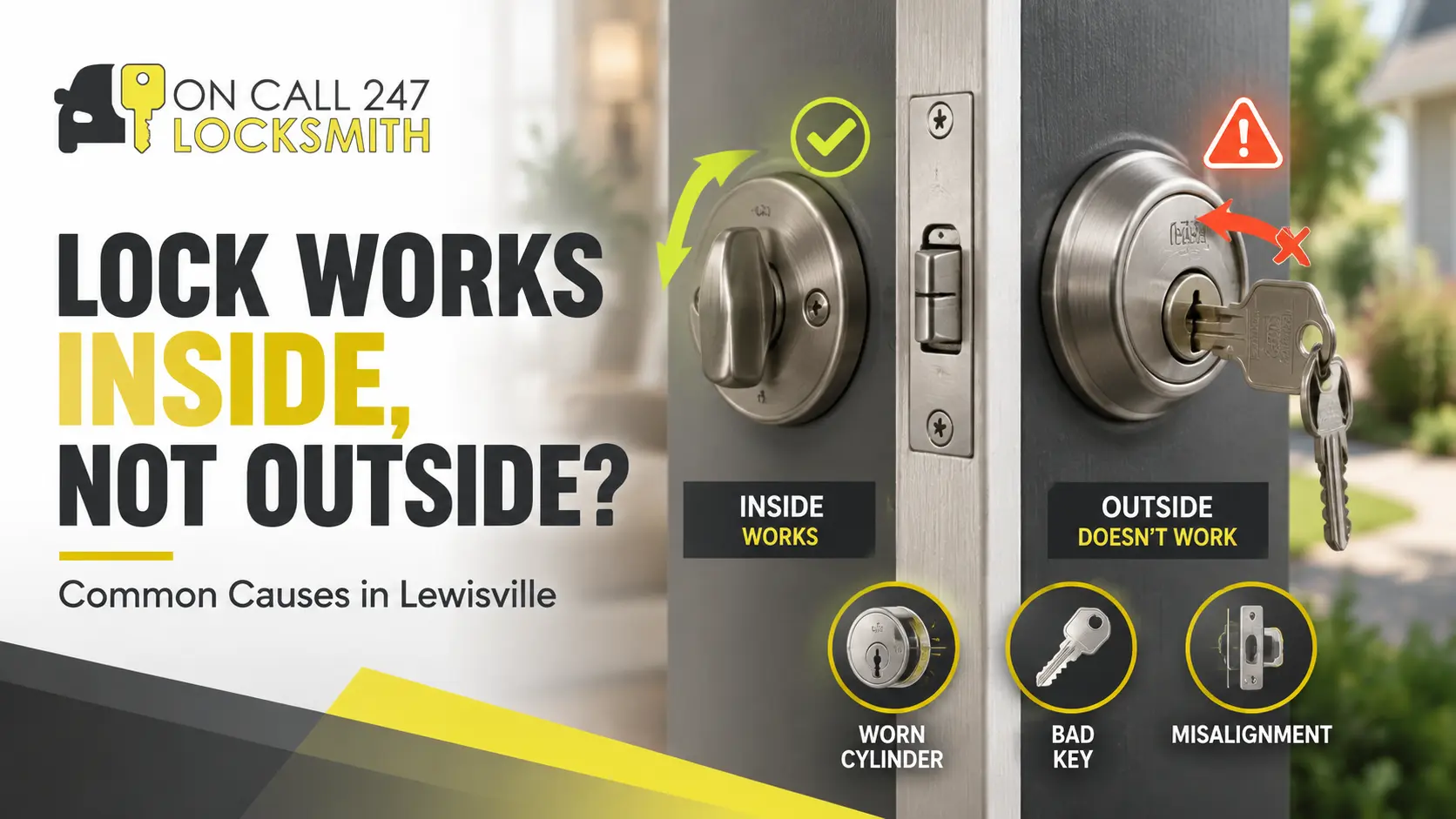
When your door locks perfectly from the inside but refuses to turn from the outside, you’re dealing with an asymmetrical lock failure. This isn’t a matter of user error; it’s a mechanical problem inside the lock cylinder or between the exterior hardware and the internal mechanism. The inside and outside components don’t share all the same parts, which is why one side can work while the other fails.
What Causes a Lock to Work from One Side Only
A door lock that engages from inside but not outside usually has a problem in the exterior cylinder, the cam that connects both sides, or the key itself. Here’s where the failure typically starts.
Worn Exterior Cylinder
The outside cylinder takes more abuse than the inside. Weather exposure, attempted break-ins, dirt buildup, and constant use all wear down the pins and springs inside. When the pins bind, or springs lose tension, the key can’t lift them into the correct position. The inside mechanism still works because it’s protected from these stressors.
Damaged or Worn Key
A key that’s bent, worn down, or improperly cut may not lift the pins high enough from the outside. The inside lock often uses a thumbturn that bypasses the pin system entirely, so the worn key doesn’t affect it. If your key feels loose in the lock or wiggles more than usual, this is your problem.
Misaligned Cam or Tailpiece
The cam or tailpiece is the small metal piece that transfers rotation from the cylinder to the bolt. If it’s loose, bent, or misaligned, turning the key outside may spin the cylinder without actually engaging the lock. The inside thumbturn connects directly to the bolt, so it still works. This often happens after someone forces a sticky lock repeatedly.
Frozen or Corroded Pins
Moisture gets into exterior cylinders, especially in locks that haven’t been maintained. When pins rust or freeze, they won’t move smoothly. You’ll feel resistance when inserting the key, and it may turn partially but not fully engage the bolt.
Door Alignment Issues
If your door has shifted due to foundation settling or hinge wear, the exterior cylinder may be under pressure that prevents full rotation. The inside lock doesn’t experience the same binding because it sits closer to the bolt. You’ll often notice the door sticks when closing or the latch doesn’t align perfectly with the strike plate.
Warning Signs the Lock Is Failing
Most locks don’t fail without warning. Watch for these signals before you get locked out completely.
- Resistance when turning the key — if it takes extra force to turn from outside, the cylinder is wearing out
- Key doesn’t insert smoothly — pins are binding, or the keyway is damaged
- Key turns, but the bolt doesn’t move — cam or tailpiece problem
- Loose key wiggle — worn pins or an improperly cut key
- Visible rust or corrosion around the keyhole — moisture has compromised internal components
How Lewisville Weather Affects Exterior Locks
Texas heat and sudden winter freezes create expansion and contraction cycles that stress lock cylinders. Humidity causes internal corrosion even on locks that look fine from outside. That’s why lock maintenance matters more here than in drier climates.
Should You Lubricate the Lock Yourself
You can try graphite powder (never WD-40 or oil-based lubricants) if the key turns stiffly. Spray or puff graphite into the keyway, insert the key several times, and test. If it doesn’t improve within a few tries, stop. Over-lubricating can gum up the pins worse than before. And if the problem is a broken part or worn pins, no amount of lubricant will fix it.
When to Call a Professional
If your key is obviously bent or damaged and you have a spare that works fine, get a fresh copy cut. But if the spare also fails from the outside, the cylinder needs professional attention. Also, if your door is visibly misaligned, fix the door alignment first. We can repair the lock afterward if needed, but fixing a lock on a misaligned door is just a temporary solution.
Frequently Asked Questions
Can I keep using the inside lock if the outside doesn’t work?
Short term, yes but you risk getting locked out when you leave. If the exterior cylinder is compromised, the lock may also fail to secure your door properly. Get it repaired before you leave on vacation or have that problem at 2 a.m.
How long does it take to fix this issue?
If we’re replacing the cylinder, it usually takes 15–30 minutes on-site. If the problem is key-related and you need a new key cut, even faster. Door realignment or internal bolt repairs can take longer depending on the lock type and door condition.
Will I need a completely new lock?
Not always. Many exterior cylinder problems can be fixed by replacing just the cylinder or rekeying the lock. If the cam is broken or the lock body is damaged, then yes, replacement is the better option. We’ll assess on-site and give you the honest answer.
Is this a security risk?
If the lock won’t engage from outside, your door may not be locking securely even when you think it is. Test it lock from inside, then gently push the door from outside. If it opens, you have a problem that goes beyond inconvenience.
Ready to get started in Lewisville?
OnCall 24/7 Locksmith is here to help with door lock work from inside but not outside in Lewisville. Reach out today, and we’ll walk you through your options, answer your questions, and book a time that works for you.
Call (469) 676-0803 or visit OnCall 24/7 Locksmith to schedule your Lewisville appointment.

